



A 150-room hotel can pay every water bill on time and still lose money, because the meter on its DN100 supply line was chosen by pipe diameter alone. A commercial water meter sits where engineering meets revenue: it has to stay accurate while flow swings from a nighttime trickle to a midday peak, and every percentage point of error is multiplied by volumes a household meter never sees. This guide explains what actually separates a commercial meter from a residential one, which technologies suit which flow profiles, and how to size, install, and maintain a meter so the numbers on the invoice hold up.
What Makes a Water Meter "Commercial"?
Diameter is the first marker. Residential meters typically run from DN15 to DN25, with DN40 at the very top of domestic use. Commercial models start at DN40 and climb through DN50, DN80, DN100, DN150, and beyond—large municipal trunk meters reach DN600. These are the meters installed on the service connections of apartment complexes, hotels, hospitals, schools, shopping centers, factories, and irrigation networks.
Financial exposure is the second marker. One commercial meter can carry the billed revenue of hundreds of households. A 2% under-registration on a DN100 line moving tens of thousands of cubic meters per year is a budget line, not a rounding error. That is why utilities hold these meters to stricter accuracy classes, tighter verification schedules, and heavier documentation than residential products.
Duty cycle is the third. A domestic meter spends most of its life near zero flow. A meter on a hospital or process line may run at a steady fraction of its permanent flow rate around the clock, which raises the stakes on bearing wear, pressure loss, and long-term drift.
Why Variable Demand Punishes the Wrong Meter
Commercial water use is rarely steady. An office tower draws almost nothing between midnight and five in the morning, jumps when HVAC and cleaning systems start, and peaks around lunch. If a meter is sized only for the peak, its measuring mechanism may barely register those small overnight flows. The unregistered water includes genuine consumption and, more importantly, leakage: a joint losing 100 liters per hour wastes 876 cubic meters a year, and if the meter cannot see it, nobody is billed for it and nobody fixes it.
This is why water utilities increasingly treat commercial meters as monitoring tools, not just billing devices. Night-flow analysis and district metered areas depend on meters that keep registering at low flows, because that is exactly where leaks announce themselves first.
| Property Type | Common Service Size | Flow Pattern | Meter Priority |
|---|---|---|---|
| Hotel | DN50–DN100 | Sharp morning and evening peaks, low overnight base | Wide flow range, low-flow sensitivity |
| Office tower | DN50–DN150 | Strong weekday cycles, near-zero nights | Low-flow accuracy for leak detection |
| Factory | DN80–DN300 | Long, steady process flows | Durability, low pressure loss |
| Irrigation district | DN50–DN200 | Seasonal, long-duration runs | Silt tolerance, simple upkeep |
| Municipal zone meter | DN100–DN600 | Continuous aggregated demand | Stability, remote data output |
Matching the Technology to the Job
Most commercial meters are velocity-type devices: they infer volume from how fast water spins a rotor. The three mechanical families below cover the majority of installations, while electronic options fill specific niches.
Horizontal spiral wing (Woltmann) meters
In a horizontal spiral wing meter, water flows axially along the pipe and drives an angled rotor mounted in its path. The design offers high flow capacity and low pressure loss, which is why it dominates municipal mains and large building inlets from DN50 up to DN600. Many models use a detachable mechanism, so the measuring insert can be lifted out for inspection or replacement without cutting the meter body out of the line.
Vertical spiral wing meters
Vertical spiral wing meters turn the rotor axis perpendicular to the pipe, with water entering around the periphery. That geometry improves sensitivity at the low end of the flow range and shortens the installed length—a practical advantage in congested plant rooms and valve chambers.
Compound and electronic meters
Compound meters pair a large turbine with a small positive-displacement chamber and a valve that switches between them, covering properties whose flow swings extremely widely, such as hospitals. Ultrasonic and electromagnetic meters contain no moving parts and suit district metering and custody-transfer points, but they need stable power and data arrangements, and their unit cost is higher.
| Technology | Typical Sizes | Strengths | Watch-Outs |
|---|---|---|---|
| Horizontal spiral wing | DN40–DN600 | High capacity, low pressure loss, detachable inserts | Needs straight pipe runs and a strainer |
| Vertical spiral wing | DN40–DN200 | Better low-flow sensitivity, compact footprint | Lower top-end capacity than horizontal |
| Compound | DN50–DN150 | Accurate across extreme flow swings | Two mechanisms to maintain |
| Ultrasonic / electromagnetic | DN40 and up | No moving parts, rich diagnostic data | Power supply, cost, commissioning |
Size to the Flow Range, Not the Pipe
Meter standards describe performance with three flows: Q4, the short-term overload maximum; Q3, the permanent flow the meter handles continuously; and Q1, the minimum flow it must still register within tolerance. The ratio Q3/Q1 is the meter's range, written R80, R160, or R200. An R200 meter stays within its accuracy envelope at flows as low as 0.5% of its permanent rate, while an R80 meter stops being reliable well above that.
Practical sizing therefore starts with a flow log, not a pipe schedule. Measure or estimate the building's minimum night flow, its sustained average, and its peak. Pick a Q3 at or slightly above the sustained average, then choose the highest range ratio the budget allows, because the range ratio is what protects overnight billing accuracy. Also compare pressure loss at Q3, since every meter adds head loss the pumps must overcome.
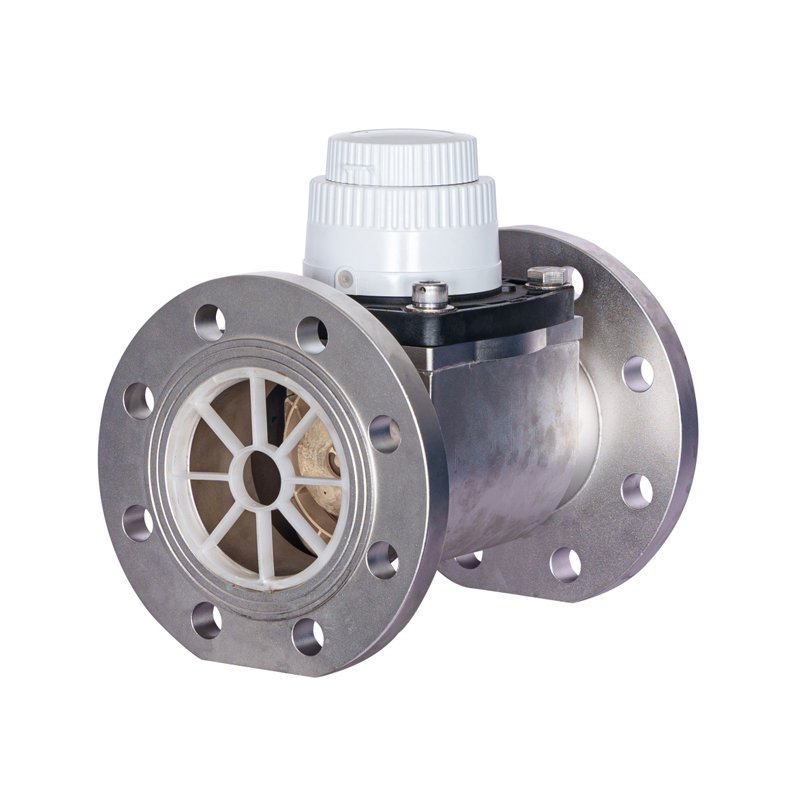 WPD/DN40-DN200 R200 Wide Range Horizontal Spiral Wing Water Meter This series of products is a new generation of wide-range horizontal spiral vane water meters developed by the Water Cube. In terms of flow metering, this series of wa... View Product →
 For buildings with wide swings between night and day demand, a wide-range R200 meter typically recovers its price premium in recovered billing within the first years of service, especially where leakage is suspected.
Remote Reading and Control: What Actually Pays Back
Four readout technologies dominate commercial installations. Pulse output uses a hall element or reed sensor to send one pulse per unit volume—simple, proven, and ideal for connecting to loggers or building management systems. Photoelectric direct reading scans the positions of the mechanical counter wheels optically, so the transmitted value can never drift from the displayed total. Non-magnetic sensing captures rotor rotation electronically without a magnetic coupling, which matters where iron particles in the water would otherwise cling to a magnet and distort registration. NB-IoT meters transmit over cellular networks, removing the need for a dedicated readout network and making them attractive for scattered sites such as irrigation offtakes.
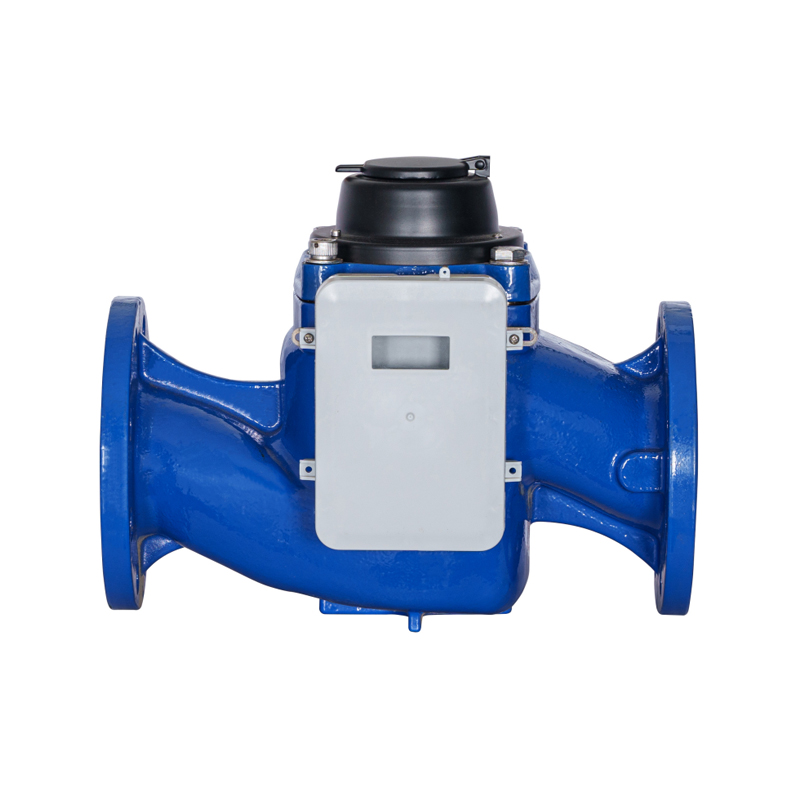 WS-DN40-DN200 High-Precision Vertical Screw Wing Detachable NB Water Meter Precise Metering: Equipped with a screw wing-type full-flow measurement movement, which guarantees high-precision metering within a wide range. View Product →
 Two adjacent functions extend these benefits. Valve-controlled meters integrate an electrically operated stacked valve, so a utility can shut off or restore supply remotely—useful for prepaid arrangements and vacant commercial units. Separately supplied sensor assemblies let operators retrofit remote-read capability onto existing mechanical meters instead of replacing them wholesale.
Installation and Maintenance Realities
Accuracy is earned at installation. Manufacturers specify a straight, unobstructed pipe run upstream of a Woltmann-type meter—typically several pipe diameters, more if an elbow or control valve sits just before it—plus a strainer upstream to stop grit from jamming the rotor. Skipping either requirement quietly erodes accuracy long before anyone notices.
Maintenance economics hinge on the mechanism design. A detachable meter lets technicians pull the complete measuring insert through the bolted meter body and fit a calibrated spare in minutes, with the line isolated by a simple valve pair. For a municipal zone meter or a hospital inlet, that difference converts a full-day shutdown into a routine service visit. Many water authorities also require periodic verification of commercial meters, so confirm the local interval and whether the supplier supports recalibration before you buy.
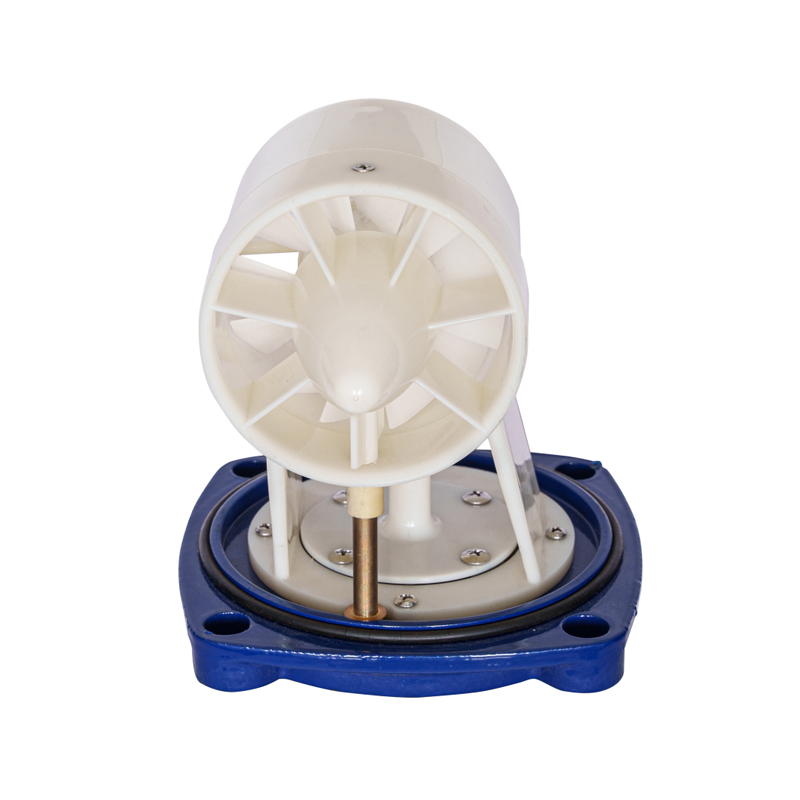 WPH DN50-DN200 Horizontal Detachable Spiral Wing Water Meter Due to the product structure and optimized impeller fluid dynamic floating design, our new generation wide range horizontal spiral wing water meter has undergone on-si... View Product →
 If you want a deeper walkthrough of this meter family, including construction details and selection tips, this horizontal spiral wing water meter guide covers the topic end to end.
A Short Buying Checklist
Before comparing quotations, work through these points in order:
- Log the flow profile: minimum night flow, sustained average, and peak demand.
- Choose Q3 to match the sustained average and favor the highest affordable range ratio.
- Confirm metrological approval and certificates recognized in your target market.
- Decide the readout technology—pulse, photoelectric, non-magnetic, or NB-IoT—before installation, not after.
- Check pressure loss at Q3 against the available head in the network.
- Verify spare mechanism availability, warranty terms, and recalibration support.
Suppliers that control their own tooling, injection molding, assembly, and calibration can usually respond faster on both custom configurations and spare parts, which matters over a meter's service life. The Water Cube meter range , for example, spans DN40 to DN600 across horizontal and vertical spiral wing designs, irrigation models, and smart variants, backed by in-house manufacturing from mold making to final calibration. Match the meter to your flow profile first, and the rest of the decision tends to fall into place.



